

Virginia Foundation Solutions
4.9 stars - 290 reviews
The Perfect Basement Humidity Level: Tips for a Moisture-Free Space

Maintaining the ideal humidity for basement spaces is one of the most overlooked parts of home care, yet it directly affects air quality, structural integrity, and long-term health risks. The right basement humidity level helps prevent mold, protects stored items, and reduces musty odors that spread throughout the home. Whether you’re managing an unfinished space or a finished living area, understanding what the humidity should be in the basement to take proactive control before moisture turns into damage. This guide breaks down recommended humidity ranges, seasonal adjustments, and proven strategies for effective basement humidity control year-round.

Key Takeaways

  • A good humidity for basement spaces generally falls between 30% and 50%.
  • The ideal basement humidity in summer requires closer monitoring due to warm, moisture-heavy air.
  • An unfinished basement humidity level should stay on the lower end to avoid mold growth on exposed materials.
  • Persistent moisture problems usually point to drainage or foundation issues, not just poor air circulation.
  • Long-term basement humidity control combines moisture prevention, drainage systems, and consistent monitoring.

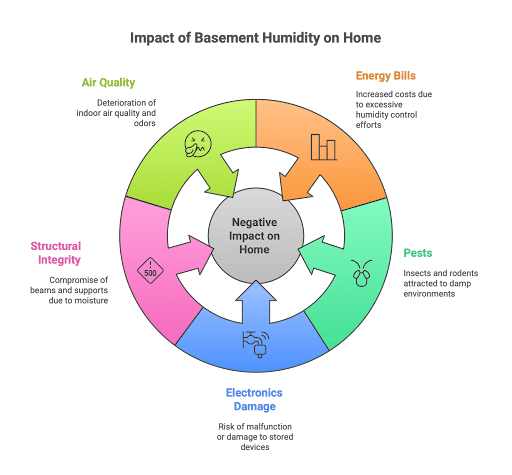
Have you ever walked into your basement and been hit with that unmistakable damp, musty smell? Maybe you’ve noticed condensation on the windows, damp spots on the walls, or even the unwelcome sight of mold creeping into corners. If so, you’re not alone. Basements are notorious for trapping moisture, and when left unchecked, excess humidity can lead to serious problems—mold growth, structural damage, and even a decline in the overall air quality of your home.

Think about it: your basement is underground, surrounded by soil that holds moisture. When that moisture seeps in, it doesn’t just stay in the basement—it rises into your living spaces, impacting your entire home’s environment. That’s why controlling basement humidity levels is about more than just comfort; it’s about protecting your home and health.

Read on to know everything you need to create a moisture-free basement that feels fresh, clean, and problem-free.

Understanding Basement Humidity: Why Is It So Damp?

Basements are prone to high humidity levels due to their location underground. Here’s why moisture builds up:

Poor Drainage Around the Foundation

Water naturally accumulates in the soil surrounding your home. Without proper drainage, moisture seeps through foundation cracks, increasing humidity inside.

Lack of Ventilation

Basements have fewer windows and less airflow, meaning humid air gets trapped more easily.

Daily Household Activities

Washing clothes, showering, or cooking in the basement releases moisture into the air, raising humidity levels for the basement.

Warm Outdoor Air Entering the Basement

Opening basement windows during humid weather can actually make things worse—warm air enters and condenses on cooler surfaces, increasing moisture.
Humidity Level For Basement

What’s the Ideal Humidity Level for a Basement?

The ideal basement humidity in summer and year-round is between 30% and 50%. Keeping humidity below 50% prevents mold growth and protects stored items from moisture damage.

Warning Signs Your Basement Humidity is Too High:

  • Condensation on windows or walls
  • A musty odor
  • Visible mold growth
  • Rust on metal objects
  • Water stains or efflorescence on walls

If you notice any of these signs, it’s time to take action.

What Should the Humidity Be in the Basement Year-Round?

Knowing what the humidity should be in the basement isn’t about picking a single number. It’s about maintaining a safe range that adjusts to seasonal conditions. In general, experts agree that a basement humidity level between 30% and 50% is optimal for most homes.

Below 30%, the air becomes too dry, which can damage wood framing and increase static electricity. Above 50%, moisture lingers on surfaces, creating ideal conditions for mold growth and dust mites. A good humidity for basement spaces keeps materials dry while still maintaining healthy air quality.

Monitoring humidity with a digital hygrometer helps homeowners respond quickly when levels drift outside the ideal range. This is especially important in basements, where moisture problems often develop quietly.

Ideal Basement Humidity in Summer vs. Winter Conditions

The ideal basement humidity in summer is harder to maintain because warm air holds more moisture. When humid outdoor air enters a cool basement, condensation forms on walls, floors, and pipes. That’s why summer humidity control often requires more aggressive strategies.

During summer months, aim to keep the basement humidity level closer to 40% rather than the upper limit of 50%. In winter, humidity naturally drops, but basements can still trap moisture from snow melt and poor drainage.

Adjusting your basement humidity control approach seasonally helps prevent sudden spikes that lead to mold or damp smells, especially during weather transitions.

Unfinished Basement Humidity Level: Why It Matters More Than You Think

An unfinished basement humidity level requires special attention because exposed concrete, wood framing, and insulation absorb moisture easily. Unlike finished spaces, unfinished basements lack sealed surfaces that slow down moisture intrusion.

For unfinished areas, a good humidity for basement conditions typically stays between 30% and 45%. Higher levels increase the risk of mold on joists, sill plates, and stored items like cardboard boxes.

Because unfinished basements often house mechanical systems, maintaining the ideal humidity for basement environments also protects HVAC equipment and plumbing from corrosion caused by excess moisture.

How to Lower Humidity in Your Basement

Reducing basement humidity levels requires a combination of moisture prevention and air management. Here’s what works best:

Install a Drain Tile System

A drain tile system is the most effective way to control moisture in the foundation. It redirects water away from your basement, preventing humidity buildup. There are two types:

  • Exterior Drain Tile: Installed around the foundation’s perimeter to collect and expel water.
  • Interior Drain Tile: Placed inside the basement along the floor edges, collecting water before it enters the space.

While a drain tile system is a highly effective solution, there are additional steps you can take to ensure long-term moisture control. Read more about these strategies in this year-round basement drying guide.

Use a Dehumidifier

A dehumidifier helps maintain the ideal basement humidity level by removing excess moisture from the air. Look for models with automatic humidity controls to keep levels between 30%-50%.

Improve Basement Ventilation

  • Use exhaust fans to circulate air and reduce humidity buildup.
  • Avoid opening windows on humid days; instead, use a dehumidifier.
  • If possible, integrate basement air circulation into your home’s HVAC system.

Seal Cracks and Leaks

  • Check for foundation cracks or gaps where water may be entering.
  • Use waterproof caulk or hydraulic cement to seal small cracks.
  • For serious foundation leaks, consider professional waterproofing solutions.

Regrade Your Yard for Better Drainage

Ensure that your yard slopes away from your home, directing rainwater away from the foundation.

Extend Downspouts and Clean Gutters

  • Downspouts should direct water at least 10 feet away from your foundation.
  • Clogged gutters cause water overflow, leading to basement leaks—clean them regularly.

Insulate Pipes to Prevent Condensation

Cold basement pipes can collect moisture from humid air, leading to dripping and increased humidity. Insulating pipes reduces condensation buildup.

Basement Humidity Control Methods That Work Long-Term

Effective basement humidity control goes beyond temporary fixes. While dehumidifiers help manage air moisture, they don’t stop water from entering in the first place. True control comes from addressing moisture at its source.

Combining drainage solutions, sealed foundation walls, and controlled ventilation keeps the basement humidity level stable year-round. Interior drainage systems and sump pumps handle groundwater, while vapor barriers prevent moisture from evaporating into the air.

When these systems work together, maintaining the ideal humidity for basement conditions becomes far more consistent and energy-efficient.

Long-Term Solutions to Stop Moisture in Your Basement

While dehumidifiers and ventilation help manage humidity, addressing the root cause ensures long-term success. Here’s what to consider to remove humidity from basement:

Install a Sump Pump

A sump pump removes water that collects in the basement, preventing excessive moisture buildup. Choose a model with a battery backup to ensure it works during power outages.

Apply Waterproof Coatings to Walls

Waterproof sealants on basement walls help block moisture. These coatings provide an additional barrier against seepage.

Invest in a Basement Waterproofing System

For homes with persistent moisture issues and high humidity level for the basement, professional basement waterproofing solutions may be necessary. Options include:

  • Interior drainage systems
  • Vapor barriers
  • French drains

How to Maintain a Good Humidity for Basement Storage and Living Space

Once you reach a good humidity for basement conditions, maintenance becomes the priority. Regularly check humidity readings, especially after heavy rain or seasonal changes. Keep dehumidifier filters clean and ensure drainage systems remain clear.

Avoid storing moisture-sensitive items directly on basement floors. Elevating storage and using sealed containers protects belongings even if the basement humidity level fluctuates temporarily.

Consistent monitoring ensures your basement humidity control efforts remain effective and prevents small moisture issues from turning into expensive repairs.

Keep Your Basement Dry and Comfortable Year-Round

Humidity problems in basements are incredibly common, but that doesn’t mean you have to live with them. 

Ignoring humidity issues won’t make them go away—in fact, they’ll only get worse over time. With the right steps, you can take control and create a basement that’s clean, dry, and safe for storage or even additional living space.

Don’t wait until basement humidity levels damage takes a toll on your basement and belongings. Whether it’s a simple fix like sealing cracks or a more advanced solution like installing a sump pump, acting now can save you time, money, and stress in the long run.

If you want to understand how to stop moisture in the basement or looking for expert guidance on basement waterproofing – contact us today for a free consultation and get started on a moisture-free basement!

Frequently Asked Questions 

1. Can indoor plants affect basement humidity levels?

Yes, indoor plants can have a noticeable impact on basement humidity. Plants release moisture into the air through a process called transpiration. If you have several houseplants in your basement, they can slightly increase humidity levels, especially in a closed environment. For humid basements, limit the number of plants or choose varieties that require less water.

2. Is it safe to run a dehumidifier in the basement all the time?

Generally, it’s safe to run a dehumidifier continuously, especially during damp seasons. Most modern units have built-in humidistats that automatically turn the device on or off to maintain your desired humidity range. However, make sure to clean the filter regularly and empty the water reservoir to prevent mold or bacterial growth inside the unit.

3. How does basement humidity affect electronics and appliances?

High humidity can cause condensation inside electronics and appliances, leading to corrosion, short circuits, or even permanent damage. If you store electronics in your basement, keep humidity below 50% and consider using silica gel packs or moisture absorbers for added protection.

4. What’s the best way to monitor basement humidity remotely?

Smart hygrometers and Wi-Fi-enabled humidity monitors allow you to check basement humidity from your phone or computer. These devices send real-time alerts if humidity levels go outside your set range, making it easy to spot problems early—even if you’re not home.

5. Can carpeting or rugs increase basement humidity problems?

Yes, carpeting and rugs can trap moisture and contribute to higher humidity levels in basements, especially if the floor is cool or damp. This creates an environment where mold and mildew can thrive. If you want to use rugs, opt for moisture-resistant materials and ensure the basement stays dry with proper ventilation and dehumidification.

Back to Blogs
Virginia Foundation Solutions-alt

Reviews

5/

Quality materials and workmanship. Matt answered all our questions, even after hours, and Miguel and his crew were efficient and resolved all issues immediately. A very satisfied customer.

Christopher
5/

Professional and courteous at all time. Crew was on site for 4 days in terrible weather and never missed a beat. Kept us informed, did what they planned and kept the areas near and clean. A really great crew.

Hal Luebke
5/

VFS crew did a wonderful job. They worked effectively together to complete our project. They used care in making sure our lawn was not ruined and they cleaned up their work area when completed.

Mary Routten
5/

Work was completed as promised. Purple crew was prompt, professional, and considerate of our home. Zero complaints

S House
5/

I highly recommend this company. They had the best price, quality work and it was completed on time, which is rare these days. It’s not easy so I commend the crew on their hard work!

Donald Marx
5/

Everything looks GREAT and the finished crawlspace was better than we expected. The RED crew did a great job and left the entire worksite cleaner than it was when they arrived.

Mike Shaffer
5/

We recently used VFS to install an interior french drain and sump pump in our finished lower level. The "purple crew" was assigned to our job and they were fabulous!!! They were timely, neat, respectful and hardworking. We are very happy with the job they did.

Howard Bloom
5/

The yellow crew (Willy, Marco, Oscar, and Patrick) were VERY professional and hard working. They kept us informed every step of the way. The clean up at end of the workday was exceptional. The best part is my foundation is fixed and our crawlspace is the cleanest crawlspace I have ever seen.

Scott Withdrew
5/

The workers were very professional, experienced and knowledgeable. They left the crawlspace with reinforced support beams. A supervisor checked their work in the afternoon.

Rick Ruscak
5/

VFS did a great job on our house’s foundation in double quick time and when they left our yard was cleaner and tidier than it was when they came! Thank you all. The masonry team also did a wonderful job. The damaged brickwork looks as good as new. Well done!

Alan Stephenson

Newport News

5/

We loved working with this company. All of the workers were friendly and helpful. They were very particular about their work and showed professionalism and organization. They did a great job; we are so thankful for their help.

Daphne Jonas

Poquoson

5/

Professional and kind staff, started on time, finished on time, good clean up, and next best bid was 40% higher using same materials. Highly recommend!

Ron Bianchi

Suffolk

5/

VFS was on time, clean, polite and thorough with good workmanship.

Lois Horton

Newport News

5/

Great customer service. Fantastic work under the house along with follow through to ensure everything was complete. Our Moisture and Termite inspector said it was the best "under house" inspection he'd done!

Larry Bianchi

Virginia Beach

Schedule Free
Inspection